
Every plan to improve hotel ratings tends to start with something large: a renovation, a new loyalty tier, a rebrand. But the score a guest types into a review site rarely turns on any of those. It turns on the small moments: the extra towels at 9:40 p.m., the quiet room request that got answered, the person at the front desk who knew their name on day two. Guest messaging is what decides how those moments go, and it's the most affordable rating strategy a property has. Here's how the chain works, and where hotels lose points they never knew were up for grabs.
Where Hotel Ratings Come From

A rating is a memory, compressed. By the time a guest opens the review form, a four-day stay has collapsed into two or three scenes the guest can still recall, and the score reflects whichever scenes won. The marble lobby rarely makes the cut. The bathrobe that arrived in ten minutes does.
That has two consequences for anyone trying to improve hotel ratings. First, the number isn't set at departure, it's being written all week, in real time, by a few dozen small interactions. Second, the score is asymmetric: one unanswered complaint outweighs three pleasant ones. Guests don't average their experiences; they anchor on the worst moment and the best one. Hotels that manage the worst moment protect the whole score.
The Silence That Turns a Hiccup Into a One-Star Review

Here's the pattern that costs hotels the most points, and it never shows up in an incident log. A guest finds a problem at 10 p.m. The heater won't respond, the Wi-Fi is down, the neighbor's television is loud. They text the front desk number from the directory. Nothing comes back. So the guest writes the complaint down somewhere more public, where an answer is guaranteed: the review.
The problem was never the heater. Broken hardware is a two-star detail at worst, and most guests forgive it. What guests don't forgive is being unheard, and silence converts a fixable complaint into a public one. Roughly 60% of routine front-desk inquiries can be automated out of the queue entirely (the towels, the hours, the thermostat how-to), which leaves the human staff the margin to answer the messages that need judgment, fast, before a guest starts drafting a review in their head.
Messaging Gives You a Mid-Stay Save
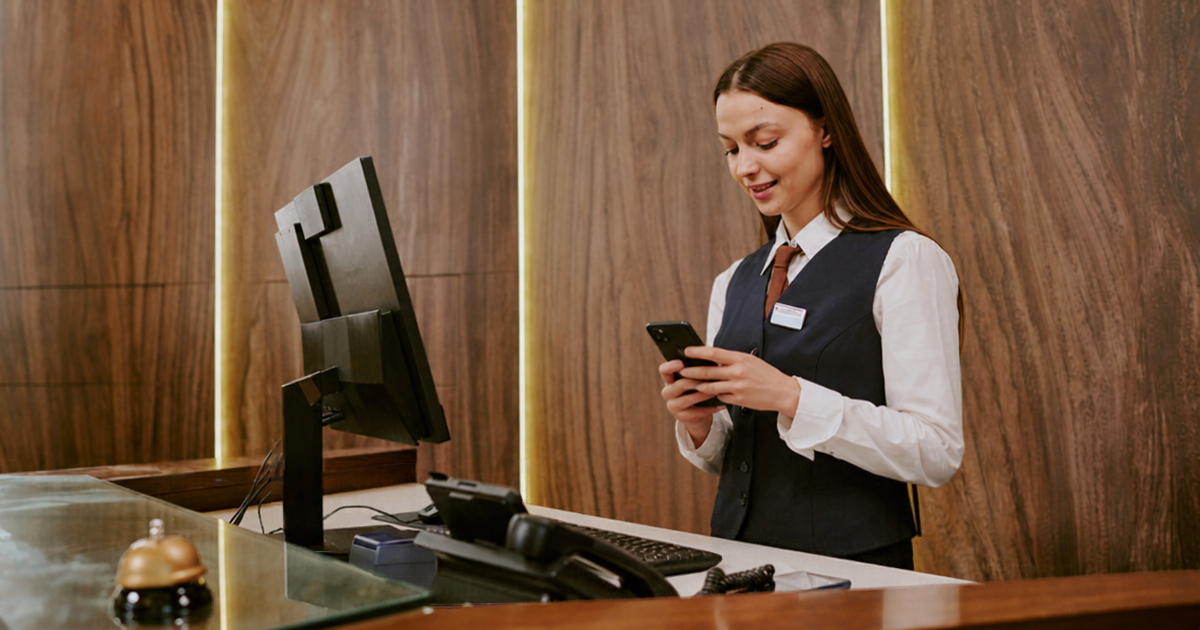
The save happens through the same channel the complaint would have used. When a guest can message the property on WhatsApp or SMS, no app download, no dial tone, no queue at the desk, the complaint lands with the property instead of the internet. Someone (or some assistant) answers in two minutes, maintenance gets dispatched, and the story the guest tells later changes shape: "the heater broke, but they had someone up there in fifteen minutes." That sentence coexists with five stars. "Nobody ever responded" does not.
Hospitality technology has made this table stakes. Guests connect by scanning a QR code at the front desk or in the room, and from then on the property is a text thread away: for room requests, restaurant questions, a late arrival needing directions, anything. An AI assistant handles the routine volume 24/7 and passes the judgment calls to staff, so the 11 p.m. complaint gets an answer whether or not anyone is at the desk.
Ask for the Review While the Fix Is Fresh

Timing decides whether the ask works. A generic "review us" email three days after departure reaches a guest whose memory has already gone flat. A message that arrives an hour after you solved their problem reaches a guest who is, briefly, delighted: you gave them proof the hotel cares, which is the exact sentiment reviews are made of.
Structured feedback closes the loop. A short in-stay or post-stay survey (overall stay, cleanliness, service, a recommendation score) tells you which small moments are dragging the average before the public review locks it in. The guest with a lukewarm answer gets a follow-up and, where warranted, a make-good. The guest who scored you five gets the review ask while the goodwill is warm. Both messages go out over the same messaging platform, segmented the way hotel communication already works: upcoming arrivals, recent departures, VIP guests, each receiving the message that fits their week.
Doing This for 200 Rooms Without Hiring 200 People

The objection is scale, and it's fair. What works as one person texting twelve guests falls apart at two hundred rooms, four languages, and three shifts. This is where hotel automation stops being a convenience and becomes the mechanism: an AI assistant carries the routine load (the questions, the requests, the local recommendations) in every guest's own language, around the clock, while personalization at scale keeps the messages feeling written rather than broadcast.
The compounding effect is what changes the rating over a quarter. Every request handled quietly is a moment that doesn't decay into a complaint. Every survey answer is a fix made before the next guest hits the same snag. Guest experience stops being a department and becomes a property-wide habit, reviewed weekly on an analytics dashboard that shows what guests asked, what got resolved, and where the friction concentrates. Hotels that run this loop see the number move: not because they asked harder for reviews, but because there are simply more good moments to write about.
For more on the mechanics, we've covered what front-desk automation looks like day to day and what guest messaging ROI data shows.
Frequently Asked Questions
How does guest messaging improve hotel ratings?
It intercepts complaints while they're still private and fixable, recovers service in front of the guest, and lets you ask for the review at the moment of maximum goodwill: right after a problem got solved. The rating moves because fewer bad moments survive to reach the review form, not because the ask got louder.
When should hotels ask guests for reviews?
After a resolved request or near departure, in the same messaging thread the guest already uses, once. A guest who watched you fix something an hour ago is the warmest audience you will ever have; a guest three days into silence is the coldest. One ask, well timed. Repeat asks read as pressure and cost goodwill.
Can you prevent a bad hotel review before it is posted?
Often, yes: not by suppressing anything, but by hearing the complaint first. A guest who messages the property and gets a fast, human-sounding response has had their grievance acknowledged and, in most cases, fixed. The public review exists to be heard. Give the guest a better place to be heard and most of them take it.
Msg2ai puts 24/7 guest messaging, mid-stay saves, and well-timed review asks on one platform. See your response times drop this week, Request a demo.