
Hotel teams handle hundreds of guest questions and requests every week. Many of these interactions are repetitive, time-consuming, and require the same information to be shared repeatedly.
An AI concierge for hotels helps properties provide instant guest communication while reducing front desk workload, allowing staff to focus on delivering exceptional guest experiences.
As guest expectations continue to rise, hotels are increasingly adopting hotel AI concierge solutions to deliver faster, more convenient, and more personalized support.
How Can I Automate Guest Communication?
Let an AI concierge answer the routine questions guests send by message, and keep your staff for the conversations that need a person. In practice that takes five steps:
- List the questions your front desk repeats. Wi-Fi, parking, check-in times, amenities, and directions make up a large share of daily guest messages.
- Put the answers in one place. Property information, policies, and local recommendations become the assistant's knowledge base.
- Meet guests on the channels they already use. Msg2ai AI Ambassador answers over SMS, WhatsApp, and RCS in 100+ languages. Guests start a chat by scanning a QR code or tapping a link, with no app to download.
- Connect your PMS so answers and pre-arrival messages reflect each guest's actual reservation. AI Ambassador has live integrations with Apaleo, Mews, Protel, and Shiji.
- Set up a human handoff. Anything the assistant cannot resolve is escalated to a staff member.
Guests get instant answers at any hour, and your team spends less time repeating the same information. The five tasks below are the best place to start.
What Makes a Task Ideal for AI Automation?
Not every guest interaction should be automated.
The best tasks for an AI concierge for hotels are:
- High frequency
- Repetitive in nature
- Information-based
- Low complexity
- Suitable for messaging conversations
These tasks create immediate value for both guests and staff while improving operational efficiency.
Task #1: Answering Frequently Asked Questions
Guests frequently ask the same questions throughout their stay.
Common Examples Include
- Wi-Fi information
- Parking information
- Property amenities
- Pool hours
- Dining information
- Property policies
A hotel AI concierge can provide instant responses through messaging channels, ensuring guests receive information whenever they need it.
Benefits
- Faster guest responses
- Reduced front desk interruptions
- Consistent information delivery
- 24/7 support availability
This is often the first and most impactful use case for AI guest communication.
Task #2: Pre-Arrival Guest Communication
Guests often have questions before arriving at a property.
An AI concierge for hotels can assist with:
- Arrival information
- Property directions
- Parking guidance
- Property amenities
- General guest questions
Providing information before arrival helps create a smoother guest experience while reducing inbound inquiries.
Benefits
- Better guest preparation
- Reduced arrival-day questions
- Improved guest satisfaction
- More efficient front desk operations
Hotels that automate pre-arrival communication often see improved guest experiences before arrival.
Task #3: Local Recommendations and Concierge Support
Guests frequently seek recommendations during their stay.
A virtual concierge can provide information about:
- Restaurants
- Attractions
- Local activities
- Shopping areas
- Entertainment options
Because recommendations are delivered through messaging, guests can access information instantly without contacting the front desk.
Benefits
- Faster access to information
- Enhanced guest experiences
- Personalized recommendations
- Reduced staff workload
This type of hospitality AI assistant helps create memorable guest experiences while reducing operational demands on hotel staff.
Task #4: Guest Support Requests
Guests often need assistance locating information or resolving simple questions during their stay.
Examples Include
- Property information
- Amenity details
- Facility directions
- Service information
- General support questions
An AI concierge for hotels can provide immediate responses while ensuring guests remain informed throughout their stay.
Benefits
- Faster response times
- Improved guest communication
- Greater convenience
- Consistent support availability
For many hotels, guest support automation becomes one of the highest-volume use cases.
Task #5: Multilingual Guest Communication
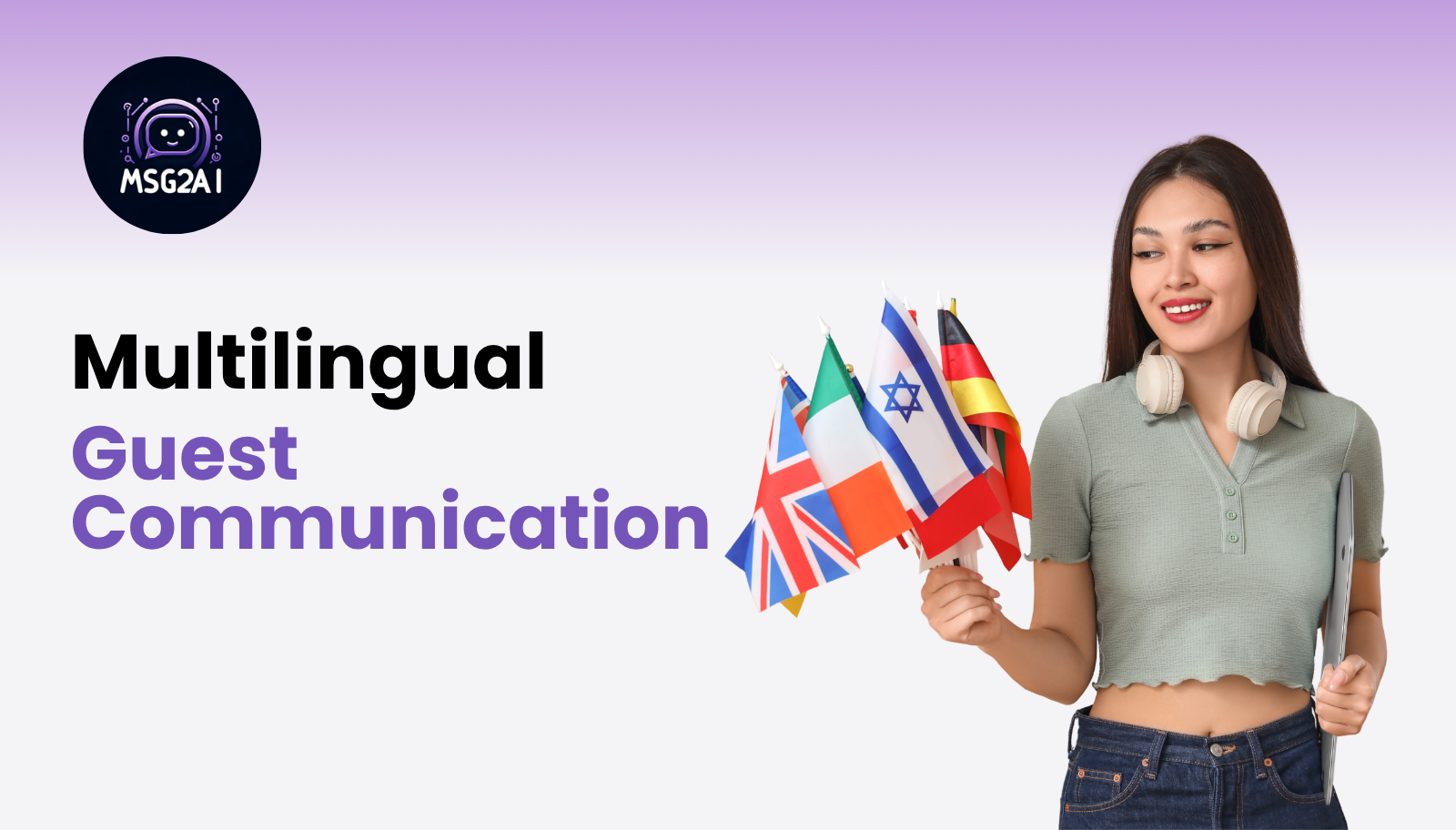
Hotels serve guests from many different countries and language backgrounds.
AI-powered hotel guest messaging can provide communication in multiple languages, allowing guests to receive information in their preferred language.
Benefits
- Improved accessibility
- Better guest understanding
- Enhanced communication experiences
- Support for international travelers
Multilingual support allows hotels to deliver better service without requiring multilingual staff to be available at all times.
The Day-One AI Concierge Checklist
Before launching an AI concierge, hotels should ensure the following are ready:
- Property information documented
- Frequently asked questions prepared
- Guest communication channels configured
- Local recommendations available
- Human handoff procedures established
These foundational elements help ensure a successful AI concierge implementation.
If you are preparing that groundwork with a small team, the free Claude Skills for hotels give each role on a hotel team, from front office to housekeeping, its own AI teammate for work such as check-in flow, guest-request handling, and shift handovers. The open-source pack is also documented at hotel-team-skills.com.
How AI Concierge Technology Benefits Hotel Teams
An AI concierge is designed to support staff, not replace them.
By handling repetitive communication tasks, hotel teams can focus on higher-value guest interactions that require empathy, personal attention, and human judgment.
Key Outcomes Include
- Reduced communication workload
- Faster guest responses
- Improved operational efficiency
- Better guest experiences
- Consistent service delivery
This combination of automation and human service creates a stronger hospitality experience.
How Msg2ai Supports Guest Communication

Msg2ai is a messaging-based hospitality AI assistant designed for hotels and hospitality organizations. It provides instant guest communication through messaging channels while helping reduce operational workload and improve guest experiences.
Core Capabilities
- Virtual concierge support
- Instant guest messaging
- QR-code access
- Human-like conversations
- 24/7 availability
- Messaging-first experiences
Guests can simply scan a QR code or access a messaging link to begin interacting with the assistant.
Why Hotels Are Adopting AI Concierge Solutions
Modern guests expect quick and convenient communication.
AI concierge solutions help hotels meet those expectations by providing instant responses, simplifying hotel guest messaging, and creating more seamless hospitality experiences.
Key Drivers of Adoption
- Growing guest expectations
- Staffing challenges
- Demand for 24/7 support
- Increased messaging preferences
- Operational efficiency goals
As guest expectations continue to evolve, messaging-first concierge experiences are becoming an increasingly important part of hospitality operations.
Conclusion
The most effective AI concierge implementations start with simple, high-impact guest communication tasks.
By automating frequently asked questions, pre-arrival communication, local recommendations, support requests, and multilingual messaging, hotels can quickly improve guest experiences while reducing front desk workload.
For hotels looking to improve service quality while increasing operational efficiency, an AI concierge for hotels provides one of the fastest paths to measurable results.
Frequently Asked Questions
What is an AI concierge for hotels?
An AI concierge for hotels is a messaging-based assistant that answers guest questions and requests instantly on the property's behalf, through channels such as SMS, WhatsApp, and RCS, and hands anything it cannot resolve to staff.
What are the benefits of implementing an AI concierge in a hotel?
Faster guest responses, fewer front desk interruptions, consistent information on every channel, multilingual support for international guests, and 24/7 availability without adding night or weekend staff.
What are the best practices for automating front desk tasks in a small hotel?
Start with high-frequency, information-based questions such as Wi-Fi, parking, and check-in times. Document your property information and FAQs before launch, configure the messaging channels guests already use, set a clear human handoff, and expand to pre-arrival messages and local recommendations once the basics run smoothly.
Does an AI concierge replace hotel staff?
No. AI concierge solutions support hotel teams by handling repetitive communication tasks while allowing staff to focus on higher-value guest interactions.
What tasks can an AI concierge automate?
AI concierges can assist with FAQs, pre-arrival communication, local recommendations, property information, multilingual support, and routine guest service requests.
How do guests interact with an AI concierge?
Guests typically access the assistant through a QR code, messaging link, or guest communication platform and interact through familiar messaging channels.
How much can an AI concierge reduce front desk workload?
The impact varies by property, but AI concierges are most effective at reducing repetitive guest inquiries and routine support requests that consume significant staff time.
Is an AI concierge available 24/7?
Yes. AI concierge platforms provide around-the-clock guest support, ensuring guests receive assistance regardless of time or staff availability.
What hotels benefit most from AI concierge technology?
Hotels, resorts, vacation rentals, and hospitality organizations that manage high volumes of guest communication can benefit significantly from AI concierge solutions.